 admin
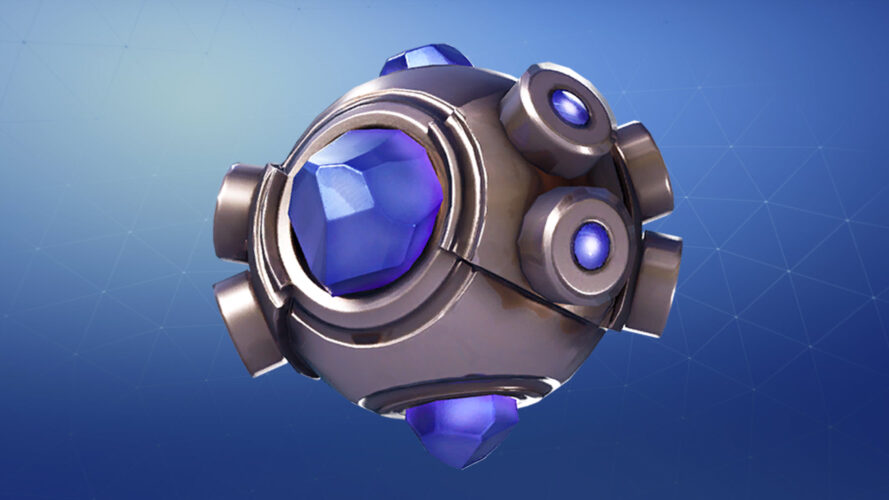
adminWith Shockwave Grenades vaulted and the newly introduced Wingsuits dividing opinion, the Fortnite community finds itself sharply split over whether the so-called “Pacific Break” meta has fundamentally slowed the game’s tempo—or simply forced players to unlearn years of bad habits. What was once a high-octane experience defined by instant disengagement and explosive rotations now feels, to some, more deliberate, more punishing, and undeniably more strategic.
The Vaulting of the “Panic Button”
For years, the Shockwave Grenade functioned as Fortnite’s universal safety net. It was the panic button every player carried: mistime a peek, get third-partied, misread a rotation, and you could still launch yourself out of danger with a single throw. Shockwaves didn’t just save lives—they shaped decision-making. Players took riskier fights, overextended more often, and relied on instant mobility to erase mistakes.
In Chapter 7 Season 1, Epic Games made a decisive break from that philosophy. By vaulting Shockwaves entirely, they didn’t just remove an item—they removed an entire mindset. Suddenly, mid-game rotations demand forethought. Engagements must be chosen carefully. Terrain, cover, and timing matter again. For players accustomed to constant forward momentum, the result feels jarring. The phrase “walking simulator” has become a recurring complaint, especially among those who equate speed with excitement.
High Stakes, Low Velocity
On paper, the new mobility tools—Wingsuits and Hot Air Balloons—appear to fill the vacuum left by Shockwaves. In practice, they operate on an entirely different risk profile. The Wingsuit’s startup animation introduces a critical vulnerability window, turning what should be an escape into a gamble. Commit too early and you’re exposed; commit too late and you’re already eliminated.
Hot Air Balloons offer vertical mobility but at the cost of predictability. Rising slowly into the sky may grant vision, but it also paints a target on your back—especially in a meta dominated by the high-precision Deadeye AR. Instead of reactive escapes, these tools demand proactive planning. In the current 2026 meta, poor positioning is no longer something you can erase with an item slot. If you’re caught out, you fight—or you lose.
The result is a game where spatial awareness and route planning have regained their importance. Rotations are slower, but also more meaningful. Every move has weight, and every mistake carries consequences.
The Map Problem
This shift is felt most acutely in the southwestern desert biome of the new map. Wide-open spaces, sparse cover, and long traversal distances amplify the absence of instant mobility. Without Shockwaves, crossing these areas becomes a commitment rather than a formality. Players are forced to rotate earlier, stick to natural cover, or risk being picked apart in transit. While some praise this as a return to tactical fundamentals, others argue it disrupts pacing and accessibility—particularly in modes designed for fast, casual play.

The Community Verdict
Unsurprisingly, reactions vary by skill bracket. Competitive players and high-level grinders largely welcome the change. To them, the meta rewards discipline, positioning, and macro decision-making—skills that were often overshadowed by mechanical escapes in previous seasons. Endgames feel more earned, and survival feels more intentional.
The casual and Zero Build communities, however, are less enthusiastic. Without a reliable, instant traversal option, matches are increasingly funneling large numbers of players into the final circles. The result is chaotic, congested endgames that resemble early professional scrims—crowded, unpredictable, and often overwhelming. For some, this chaos is thrilling. For others, it’s exhausting.
Whether the “Pacific Break” meta represents healthy evolution or an overcorrection remains an open question. What’s clear is that Fortnite has entered a new phase—one where momentum is no longer guaranteed, and every step forward must be earned.


Add comment